A Review of Kiran Desai’s The Loneliness of Sonia and Sunny (Part I)

Booker Prize winner Kiran Desai’s long-awaited novel, The Loneliness of Sonia and Sunny, is a detailed account of two young Indians settled in America and of their navigation of culture, roots, and identity. The story unfolds steadily and gives an early impression of another set of confessions and nostalgic longings of an Indian American author. However, the book carries more weight than its first impression suggests. It builds excitement and thrills as it catches up on each page, leading readers to read about the worlds of the protagonists. The detailed descriptions of the lives of Sonia, Sunny, and their families in the Indian cities of Delhi and Allahabad create a deep connection between the characters and readers through relatability. The author has maintained the integrity of the details by presenting them as realistically as possible and, at the same time, made the context interpretative and reflective by adding sociological, economic, and political layers. As a result, readers will find this all-encompassing book meditative and compelling, enough to nudge them to analyze and interpret the stories they have already lived or are living. So, Indian readers should get ready to pinch themselves while reading this remarkable novel.

One comprehends why the author has emphasized the word “loneliness” only after becoming familiar with the characters and their contexts. Ms. Desai has spun beautiful, descriptive, and reflective stories around changes in politics, historical references, and age-old stereotypes that persist in Indian communities. She enables readers to redefine the definition of loneliness by looking into it in diverse contexts, ranging from the loneliness of young Sana and Sunny figuring out their identity in a foreign land, their parents and their bid to survive the changes in the absence of any support, constant vigilance denying the right of private thoughts, loneliness of migrants forced to leave their birth places to do tenacious odd and menial jobs, loneliness of artists, among others. Besides enlightening readers about the different categories of loneliness, the novel also offers optimism about discovering love despite all odds.

The painstaking, thorough descriptions of the daily lives of people from different socioeconomic classes in India and America instinctively help readers form a clear image in their minds. They also help us recognize the differences and similarities between the characters, despite their geographic distance. The vivid description of Jackson Heights, one of the underbellies of the city of Brooklyn, and Sunny’s mother Babita’s instant comparison with the outskirts of Delhi strike a chord with all of us. Similarly, the depiction of racism, different yet similar in nature, being subtly practiced by people irrespective of time and place, will certainly ring a bell. The stereotyping of different communities like Hispanics, Chinese, and Blacks, and its unabashed practice by us, has been highlighted through the amusing arguments between Sunny and Babita. Like the diverse types of loneliness, the author also discusses different forms of racism, without salvaging any of the book’s characters. Whether it’s Sunny’s white girlfriend’s repulsion toward certain typical characteristics of Indians, like arranged marriage, curries, among others, or Babita’s age-old disdainful outlook towards Chinese, Blacks, and Hispanics. Whether it’s Sunny and Sonia’s stereotypical outlook toward Indians, or Sonia’s boyfriend Ilan’s approach toward women.  

Ms. Desai also throws light on the loneliness inflicted by the dependency inherent in love. When Sonia’s eccentric artist boyfriend takes full control over her life, her instinct to differentiate between love and domination is totally paralyzed. She falsely believes it is a safe space to escape her long-standing loneliness. The toll this psychological dependence takes on Sonia has been depicted without romanticism or exaggeration. Such detailed accounts also help readers filter their thoughts and feelings. The book helps us discover our concept of loneliness and our similarities with others despite geographical divisions.   

Unrelated – A film exploring the delusional nature of love

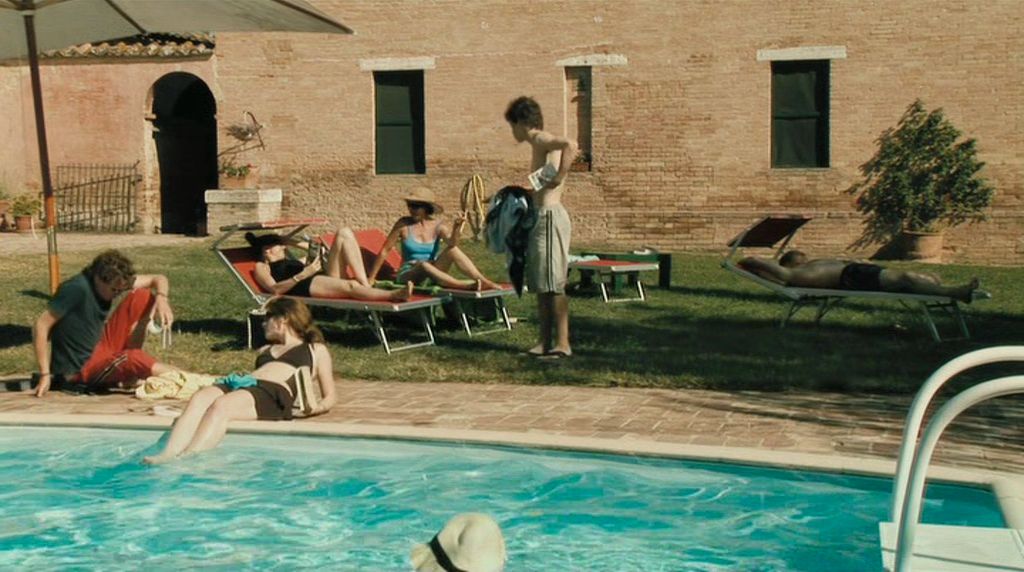
Some movies leave an impact by portraying realities as they are. They succeed tremendously in navigating through the nuances of human emotions, enabling the audience to dive into the world of passion, grief, joy, jealousy, and more. One might also wonder, at times, whether such films are all about their own personal and emotional journey, creating a bond between art and the audience. In my opinion, a large amount of human experience is gained through novels, cinema, and art. Therefore, a film is not merely a source of momentary happiness; it’s a reference point for me to understand the dynamics of human relationships. One of such classics is the film Unrelated. The film “Unrelated” by Joanna Hogg came across not as a revelation, but as a relatable story of many middle-aged men and women carrying the weight of boredom on their shoulders. Such people have already spent a large part of their lives with their partners and are now looking for things and people that would excite them. They are unconsciously driven to rediscover their lives and relive them in line with their inner feelings. Nothing new, right? That’s correct! However, the mere fact that the director, Joanna, can show these details so effortlessly and convincingly makes it much easier for the audience to relate to them and, at the same time, analyze them to form a structured opinion.

The film is about a 40-year-old woman, Anna, who, after a conflict with her partner, Alex, joins her friend and her upper-middle-class family on a vacation to try to overcome her personal crisis. She joins them in a state of disorientation, doubt, and uncertainty, beautifully portrayed by the lead actress throughout the film. While she is still recovering from her current vulnerable state, she ends up spending a large amount of her time with the young children of her friend. Anna comes across as so vulnerable throughout the movie that her closeness with one of the youngsters, Jack, also seems like an act of timidity. It seems she is constantly pushing herself in a direction chosen by her delusional concept of love. She strives hard to become part of Jack and his gang of spoiled brats, which helps her eventually comprehend the futility of such distressing emotions. The constant, uncomfortable conversations with Jack and his playful rejection of her emotions leave her more bewildered and lost. Rather than enjoying her vacation, the vacation became another roller coaster ride of yearning, grief, and sadness. She was therefore able to emerge from these muddled thoughts and understand the beauty of her relationship with Alex. This film is a reminder for middle-aged folks deluded by their surroundings to stop looking for love and a wake-up call for them to start appreciating the simpler things without being loud or holding a moral stand. The retribution of such liaisons is borne largely by women, driven to feel guilt and embarrassment for even nurturing such dreams. Without being dramatic and clamorous, the film captures the inner struggles of Anna, including the sense of abandonment by Jack, envy about his inclination toward younger women, and the inability to accept the truth.

Review of the novel “Honour” By Elif Shafak

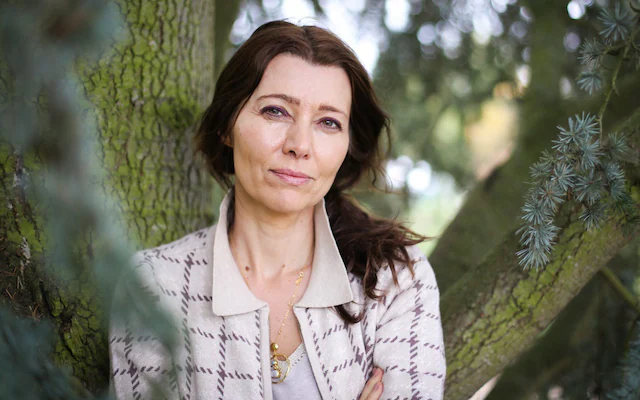
I just finished reading the novel “Honour“, written by the Turkish author Elif Shafak, and have so many thoughts and views to share on this book. The plot of the novel is sensitive, contemplative, heart breaking, real and nostalgic; I would say it’s a story that resonates with our own personal struggles in the face of social and moral restraints and dogmas perpetuated in the name of religion and culture. I might run short of words while expressing my inner feelings that rose quite strongly while reading the story. It sometimes left me teary and sometimes left me in thoughts, asking me to contemplate, reflect and empathize. Being an Asian, moral and socio-cultural restraints aren’t new to me; it can come in all shapes and forms: marriage, sartorial choices, conduct in private and public spaces, among others. The list is long and probably unending, depending upon one’s orientation and openness. The story is a concoction of search of one’s roots, search for one’s true love, search for one’s identity, search for the God, and the search for redemption and peace. Which one of these are you looking for? Like the characters of the story, each one of us are probably looking for all of them; we are sometimes caught by an immense guilt for doing something which could have been done better, sometimes caught by the fever of an unaccomplished and unrequited love, sometimes hit by the nostalgia of our birthplace and hometown despite being a place where one might have suffered the most, and sometimes looking for an answer from that spiritual power for all complexities of life. Life itself is a huge drama, depending upon where your roots are from. Death has been beautifully and subtly depicted as a way of deliverance, deliverance from lost hopes, unsolved complications of life, unrequited love, and unachieved peace.

Set in a remote Turkish village, the story looks through the eyes of the main characters: Pembe, Jamila, Iskender, Yunus and Esma. It’s a story of twin sisters Pembe and Jamila and how they perceived the patriarchal and rigid world around them; it’s also a story of Adem, who witnessed death, domestic violence and the stigma of being a son of a run away mother; it’s also explores the mind of children who grow watching the moral constraints and how they retrogressed or evolved their thoughts as an adult; it’s also a story of Iskender who goes on to stab his mother Pembe (turns out to be his aunt Jamila) to death in the name of protecting the honour of his family; it also looks at the brigher and sunnier sides of the life through the characters Yunus and Esma. Picking the favorite plot is next to impossible! However, as a reader, it’s the guilt of Iskender and his deep regrets during his prison time that touched my heart, as it makes you understand that how an action committed in a fit of anger can leave one devasted and lonely . Despite living so close physically, each and every family member steadily become distant to each other, leaving the innate trust and affection as a thing of past. It was painful to read how the societal pressure and hierarchical relationship between the father and son pushed the little boy Iskender towards the extreme path of transformation, both physically and ideologically, to gain reputation and not to get bullied and assaulted by anyone, even his own father.

How I wished when Pembe and Adem separated due to the truth that their marriage wasn’t love and unhappiness and despair as a result were spreading dangerously across their hearts and minds could have found their true love! Pembe deserved Elias, who came into her life like the sudden rain of pure joy. And, Adem deserved Jamila, whom he didn’t marry to avoid the stigma of marrying a woman who had been kidnapped and had no proof of her being a virgin. He ultimately committed suicide and Pembe died a lonely life in her birthplace. None of the characters can be painted as purely black and white. Rather, they have multiple layers and hues to their personality. However, they ultimately make peace with life and accept the end as the only way to deliverance, both spiritually and materially. I recommend everyone to read this novel to understand human psychology and their ups and downs.

Hither Kusum

What do I want from my life?

What do I want from my life?

I want to see the world, the world that has multiple layers,

Uncover each layer to fathom the depth of life,

I want to meet people,

See faces and find the story behind each wrinkled face,

Beauty of life is in just living,

Not running,

Sitting under a tree with a dense canopy of leaves,

Listening to birds before sun wakes up,

Watching the sky with dancing clouds on a stormy day,

Oh, how peaceful I feel after writing this.

Testimony of Ana – A documentary worth watching

I grew up in Jharkhand, an eastern state of India with a huge tribal belt, where the innocence and simplicity of tribals have always fascinated me. These qualities steadily disappearing from the urban spaces can be still found among the tribal communities. While growing up in the capital city of Jharkhand, it was quite common to read about the news of elephant attacks and witch hunting. Being blessed by the nature, one can understand why animal attacks, especially elephant attacks, were so common in the tribal areas of the state. However, it was the increased prevalence of the rudimentary practice of “Witch Hunting”, which really perplexed and saddened me. This horrendous practice is so common in daily life that even the witch hunting incidents get covered in newspapers in a very regular way: brief, cold and mundane. Composed in a mere few words, the reports succeed in subtly hiding the torments and brutality of the incident. At the end, the incident would seem to the readers to be just a minor spat or scuffle between irrational neighbors; however, the true face of these witch hunting incidents is too scarier to imagine and to be felt.

Witch hunting, mostly targeted on women, not just robs an individual of his or her dignity, but also inflicts a deep emotional, psychological and physical pain, beyond heal and cure. A mob, blinded by superstition and rumors, suddenly finds it to be completely within the purview of the law to punish the alleged witch hunter by publicly shaming him or her and inflicting various voyeuristic physical tortures using sticks and fists, or probably more. The mob waits for none for clarification, neither the police nor the local administration. They are convinced enough to be dissuaded from committing such an inhumane action. One gets reminded of the prevalence of such a practice by the heart-breaking documentary entitled “Testimony of Ana”, wherein the victim of a witch hunting incident recounts the tortures inflicted by a group of drunk villagers on that dreadful day. More than the infliction of physical scars, the scars made on her self-respect and dignity as a woman pains her the most. One can feel the pain in every inch of her face. The wrinkled face and wrinkle hands seem to be seeking justice still undelivered and praying for her agitated mind and heart.

When I saw her face, devoid of vivid expressions, I was reminded of a pair eyes looking for justice, a forehead constantly reminded of those unforgettable tortures, lips praying for some magic that can quieten her restless mind and heart, a pair of ears not ready to forget those insults and hair growing grey while waiting for getting back her dignity. When I try keeping myself in her shoes, I feel I might have abandoned the village and my land after going through so many insults. I might have turned into a wanderer seeking god to quieten my mind and heart. Or, I might have lost my mind and would have ended my life. Who knows? But here is a woman, mind you a village woman, who stands strongly against all injustices and is determined enough to continue living on her land. While she continues to seek justice and remains disappointed over the action taken on the culprits, she is not ready to part away from her land, her only property, because of a few drunk people and their unforgivable brutal act.

Moomal and Mahendra – An unforgettable folk story of their tragic love

Emotions like “love” has always been my weakness and am sure so would have been true for so many people across worldwide. True love is comparable to a blessing achieved after innumerable sacrifices and profound pain. To achieve and keep one’s true love intact, people have to undergo numerous ups and downs of life together and build a bond of trust and fidelity despite all challenges. It’s always better to learn this lesson as quickly as possible before it’s too late to undo the mistakes and errors that can simply ruin a relationship. The love stories from different corners of the world have guided people in love since ages on how to not make the mistakes that can become a life-long curse. One of such folk stories that deeply impacted my mind and heart is the Rajasthani folk story of Moomal and Mahendra.

Moomal, the princess as beautiful as a fairy from heaven and as intelligent as any brave warrior, was hailed as the prettiest woman in the entire desert or probably the prettiest woman that had ever had the chance the see. The already seven times married prince Mahendra stumbled upon this beautiful creation of the almighty during one of his hunting sprees. Both Moomal and Mahendra fell head over heels in love right from their first meeting. It is said their first meeting was an unforgettable experience for them. They were simply spellbound by the innate sensation of love pulsating in their hearts. They eventually depart to meet again and again despite all odds. They were completely overwhelmed by their love for each other and would not mind crossing any limit or accepting any challenge to meet. Mahendra would every night slip away discreetly on his fastest camel to meet Moomal; this continued for a while and kept their love intact. However, on learning of Mahendra’s deep interest in Moomal, the king ordered the legs of the camel to be broken. Heart broken Mahendra and Moomal were simply unable to meet and had to endure the pain of separation. Thereafter, what happens is simply heartbreaking and eye opening as well.

A series of confusions and errors lead to a sad demise of Moomal. It is said that when Mahendra managed to meet again Moomal, he mistook Moomal’s sister dressed as a man for some some amusement as a man and left her place in anger, vowing to never meet such a self-deprecating woman again. Moomal and Mahendra due to this confusion and lack of trust were living in immense pain. Eventually Moomal decided to send a messenger to Mahendra to understand the reason for distrust; when she finally understood the confusion that arose due to her sleeping next to her sister dressed in the attire of a man, she rushed to Mahendra’s palace to clear the confusion. However, Mahendra still wanted to test Moomal’s love for him and asked his soldier to convey that he has been bitten by a snake. Such a bad piece of news was simply too painful to be endured by the already heart broken and despondent princess Moomal. She was unable to bear the pain and succumbed to it. Mahendra had never on this earth imagined that his mischief will become such a lifelong curse for him; he simply lost his sanity and wandered around in search of the lovely face of his beloved Moomal.

As I always say and many wise people have already mentioned, it’s necessary to talk and communicate our doubts and confusions with each other. Such confusions that occur due to some wrong information or misunderstanding are nothing but a play of perceptions and thoughts. Such falsely built perceptions and opinions can be corrected or remedied only by clarifying openly and trusting deeply. Though difficult in the long run, it’s the only way to experience a successful relationship.

Manifestation of the Truth

The past two weeks have been challenging…mainly because of the manifestation of the truth that the world is no more free. I have been spending my time at home reading and educating myself about the facts that we will like to not accept outright…rather pretend that everything, yes every damn thing, is okay and fine. This superficial feeling can help us in overcoming the anxieties that refuse to calm down. Well, as a follower of the Buddhism, I really do see end to the rapidly rising incidents of violence, intolerance, prejudice and other dehumanizing emotions across the length and breadth of the world, especially in my own country. I know everything has an end, for sure. However, to not act and voice one’s deep fears and concerns is equivalent to cowardice, a stigma that haunts the person till his or her last breath. Right now as I speak, I am sure, many might be silently debating in their own minds and might also be trying really hard to build up their courage to stick to their values despite all odds. It’s never easy becoming courageous, it’s never easy embracing kindness, and it’s never going to be easy to remain physically and emotionally sturdy even when faced with difficulties.

AZADI by Arundhati Roy | Waterstones

Man Booker Prize Winner Arundhati Roy’s fearless essays on the recent political churnings of India

Raghuram Rajan’s book The Third Pillar rightly highlights the importance of the empowerment of the community as an agency of change and development

Though I do not always agree with the ideas of the Man Booker Prize winner Arundhati Roy’s writings, her books are eye openers and a warning of a future that we might refuse to foresee.  While her novel “The Ministry of Utmost Happiness” has a poetic and heart-touching plot that makes readers aware of the world of the deliberately marginalized communities along with the striking changes in the Indian politics, her latest collection of essays titled “Azadi” speaks the truth without any fear of punishment. She without any hesitation and fear uncovers one facet after another of the current Indian government. She discusses the deliberate transformation of a socialist and secular country into a majoritarian country through strategic marginalization of the minorities, especially Muslims, by distorting the concept o citizenship and increased free capitalism. Though she might particularly target the incumbent government, she nevertheless criticizes the past Congress-led government for laying the foundation of free market that eventually led to crony capitalism and privatization of the national institutions. She interestingly highlights the way language has played a crucial role in the concept of nationhood and creation of a separate state. The unacceptability of the people speaking another language has been heavily misused by the political powers for their own gains, whether it is the colonial powers, far right political groups, nationalist political groups, etc. At the same time, I am reading the book named “The Third Pillar” by the renowned economist Raghuram Rajan. It seems both Arundhati Roy and Raghuram Rajan are ultimately aiming for the same goal, i.e., empowerment of the community though via different yet similar methodologies. Raghuram Rajan underlines the importance of the community in creating a comparatively much safer and developed society through collaboration and cooperation. Rather than looking up to the state for intervention, people should empower themselves to empower the society.

The novel The Ministry of Utmost Happiness is all about vulnerable and marginalized sections in tough political and social times

When surrounded by such writings, one is undoubtedly likely to get disturbed over things not working rightly. They force readers to question the status quo and the shortcomings of the government which are often masked by stoking religious sentiments.  The reduction in the proportion of affirmative action for the citizens should be a warning signal for anyone who cares for his or her nation. It is essential that political groups and pressure groups create an environment for growth and safety. However, it seems the world has been suddenly pushed backwards, with the celebration of the far right sentiments. It seems none of those progressive movements ever existed as the world seems to be once again divided between haves and have nots, women and men, white and black, etc. Sometimes I sit back and try understanding these changes and find no relevant answers. Probably, at the end, people want power, they want it by any means. The glorification of the man made differences and stigmatization of the natural differences seem to be gaining much popularity lately than even as per my opinion. We need to seriously reflect and understand the political churnings around us to comprehend the magnitude of the dystopian world  thatw e are walking into.

Read folk tales to understand people

How far will we go to understand people and their emotions? Can we understand them only by devouring the highly manipulated and exaggerated news reports that tend to divide the world simply into black and white? One of the ways to overcome the inner prejudices and the imposed imageries of people based on their culture, nation, religion, etc. is to read and understand the age-old traditions and beliefs. This will assist us in comprehending the roots of any nation, culture, religion, etc. The Orientals’ attempt to project the West as progressive and far more refined has led to the normalization of this myth; this artificial divide can only be busted by reading the local literature.  In this attempt to understand Turkey and its people, I thought it wise to commence this journey by reading their common and popular folktales shared by the Turkish peasantry through the word of mouth and collated by Dr Ignatius Kunos, a passionate ethnographer.

Embedded with the beautiful illustrations by the author Celia Levetus, the book named Turkish Fairy Tales and Folk Tales will definitely assist readers in understanding the world of the Turkish people. Such folk tales play a crucial role in humanizing people from different cultures and spaces, according to me. They enable us to understand that people irrespective of time and space hold and believe in similar universal moral values and try to pass them on to their progeny through such tales. Such folk tales helped me through the tough times to stick to the values like honesty, sincerity, kindness, among others. Therefore, it was not difficult for me to connect with such tales.

A Book Review – My Arctic Journal: A Year among Ice-Fields and Eskimos

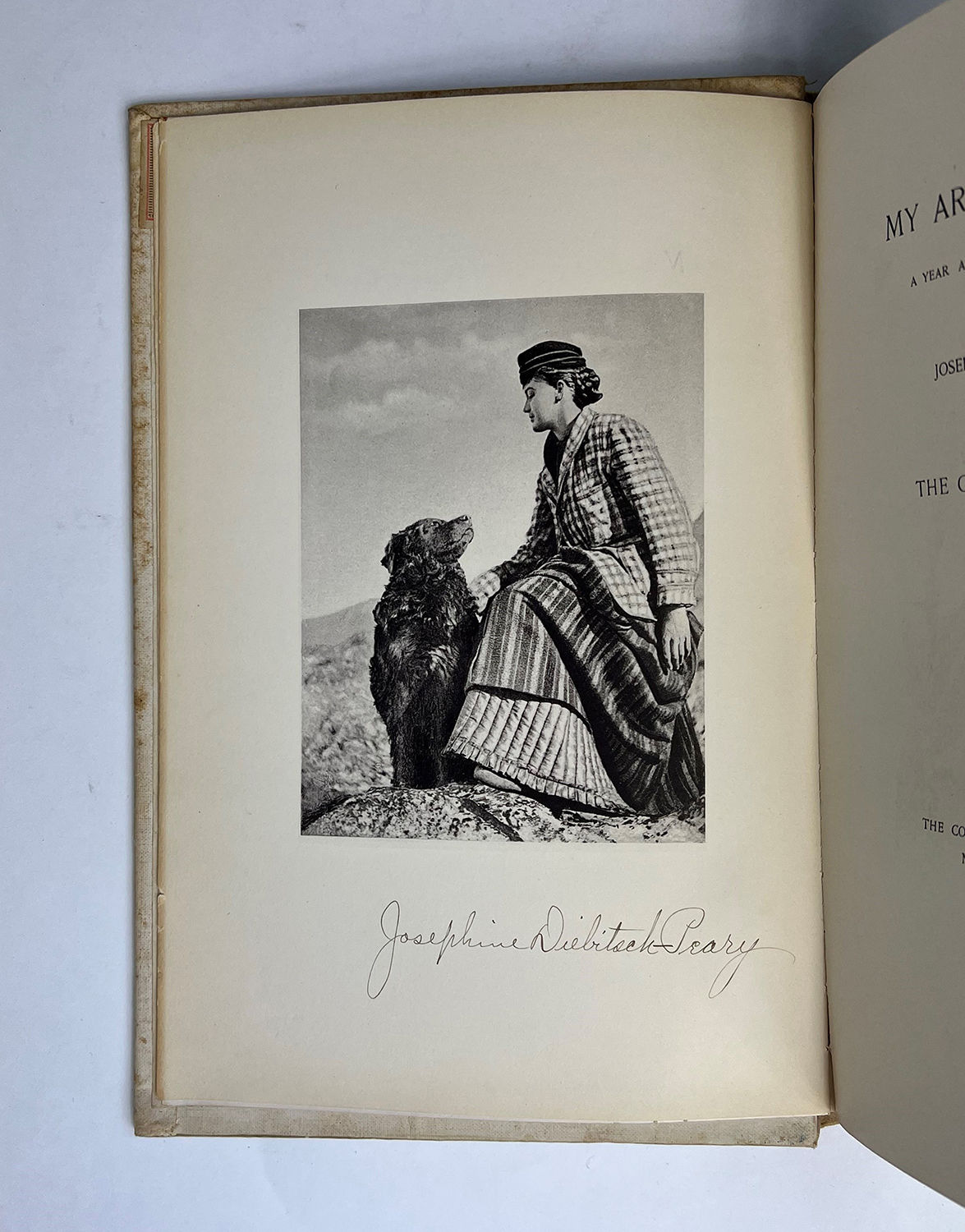
The book My Arctic Journal: A Year among Ice-Fields and Eskimos, written by the woman explorer Josephine Peary, is a lucid memoir of a woman who opts to travel with her husband, the North Pole explorer Robert Peary, to the mysterious, rough and unexplored ice fields of Greenland, rather than being confined to the four walls of her home. Penned in the late 19th century, this memoir becomes a seminal work for the folks motivated to explore the untouched and undocumented landscapes of the earth, especially woman. Let’s not forget that Josephine undertook such a challenging and path-breaking exploration journey when women were commonly being groomed merely for a suitable wedding. She also succeeds in breaking the existing divide between men and women in the field of exploration and laying the foundation for the future generations by undertaking this journey.

What really impressed me about Josephine’s writing are her unfiltered accounts and opinions pertaining to the weather, natives of Greenland, Eskimos, etc. Rather than masking her real feelings, whether it be her first thoughts about the appearance of the natives, their low cleanliness standards due to ignorance, their customs and rituals, etc., she accepts them and documents them to project the exact picture of this challenging project. I call this project as challenging because such explorations aren’t fancy and luxury travels undertaken to pamper oneself. These back-breaking, mentally stressful and unpredictable exploration journeys are rather full of unimaginable climatic and environmental dangers capable of breaking your spirits and bringing you closer to death any moment.  Therefore, I would avoid making any comment on her feelings about the natives whom she without any premeditated approach called ugly. Let’s not forget that language has undergone a lot of revolutionary changes since the time this book was written, and the current writers definitely try avoiding the usage of biased and inegalitarian words for any particular community, particularly words that define appearance or beauty.

Josephine Peary
Robert Peary

Josephine was not just a bystander in the entire exploration. Despite accompanying the team as a wife of Robert Peary, she never shirked from participating in all kinds of demanding activities, like cooking, hunting seals for food, facing all dangers bravely, strategically deciding the dress according to the climatic changes, etc. As a multitasker, it seemed she had more workload than at home. It was unimaginable for me to think that Josephine’s journey was full of hardships right from the starting of the journey. She had to not only endure the roughness of the weather and the ship trying to make its way through bergs and thick ice sheets, but also look after her husband who fractured his leg when the ship almost went out of control in the tussle with bergs. This incident exacerbated her hardships by leading to sleepless nights spent nursing her husband moaning in pain. Josephine comes across as a highly sincere and hard working woman who endures all pain and does not glorify them to gain attention. One can also feel her strong attachment with her husband when she spends many nights worrying about his well being and simultaneously managing other activities with so much dexterity.

Josephine clearly played a vital role in motivating her husband and other members by keeping things in order especially food, shelter and clothes. Therefore, one cannot strike off her contribution in this exploration.  What struck me personally the most was her endurance capacity in arranging and cooking food for so many men using whatever hunt was available in the store. It’s definitely not easy and I as a reader and a woman can absolutely comprehend her nostalgic soliloquies wherein she clearly expresses her yearning to see her family and friends. Whether it’s keeping a happy and brave face in odd times or making others feel at home by celebrating their anniversaries, social events like Thanks Giving and Christmas,  Independence Day, etc., Josephine just succeeds in keeping everyone emotionally together. She is equally adept at hunting and shooting local animals like seals, reindeer, birds, etc. and proves to be an asset for the exploration team. She remains practical and chimes in with others as per the need of the hour. Therefore, one can see how easily she overcomes her inner inhibitions and feelings to connect with the natives and work along with them in stitching weather friendly clothes, arranging other safety equipment, learning the local ways of cleaning animal skin, collecting bird eggs  on plateaus, overhauling large stinking seals, living with other locals in the igloo, etc. Josephine’s account of Arctic region journey is kind of sociological and ethnological survey of the region and its inhabitants. Her memoir enables readers to understand the landscapes, anatomy of the locals, their social and cultural customs, their myths, their language, their problems, etc. This book is definitely a must read for people looking for a mix of adventure and knowledge about such far flung regions.

Understanding Margo Roth Spiegelman

Last few weeks have been quite enlightening… as the ultimate truth “solitude is bliss” steadily dawned on me. This realization leaves one feeling lonely and empty initially, but eventually turns out to be that truest companion whom you trust more than yourself. The innate quietness of solitude calms the mind lost in a maze of indecipherable thoughts and imaginations constantly trying to control our actions. You get to understand the beauty of nature only once accompanied by solitude and bereft of desires that tend to pull us toward the cacophony of living. After being indoors for long due to pandemic, I finally decided to take a walk to a nearby local bookstore and just purchase whichever books strikes as different, even if a bit. I selected John Green’s Paper Towns and expected nothing much, except an entertaining teenage story. Yes, it is an amusing adolescent “coming of age” story. However, never judge a book by its cover, as it turned out to be a much more serious stuff, though not every time.

The protagonist Margo Roth Spiegelman impacts the readers in a massive way, especially those who have always longed for solitude and have made all efforts to escape from the traps of a defined way of living. A defined way of living is kind of lifestyle wherein procrastination is discouraged and success means fulfilling others’ dreams and not those make us different. It also means proving success by ending up like every other old grumpy person around us, i.e., bored, frustrated, irritated, constantly feeling like a loser, waiting for death and so on. It also means becoming as irrational and mundane as everyone around us; you become so mundane that you mix up with the crowd by becoming one. But here comes Margo, like our favorite characters of any fiction, who is just too bored of family and friends too mundane to discover adventure. Their superficial life and fascinations simply bore Margo and push her to the extreme side of living. What started as a mere vindication spree against cheating friends and boyfriend soon transformed into a real search for her truer side through anonymity, invisibility and mystery. If you enjoy anonymity and hate glaring at the simpering profiles of people on the so easy to reach social media sites, this book might touch the chord of your heart.

It’s just Margo and her mysterious hiding , or better to say hangout, places that made this novel a good read for me. I simply enjoyed the way she hid the true side of her personality from everyone; in fact, it fascinated me. The rich, yet not contemporary, music taste of Margo leaves the feeling of nostalgia and the innate desire to search the meaning of life and surrounding through art.  One can also relate with the inner turmoil of Margo that she was in turn able to decipher through the classic poem “Song of Myself” by Walt Whitman. Finding one’s truer self and ultimate destination through a poem that encourages and inspires everyone to discover themselves and explore the unexplored makes total sense to people like me who continuously shape their thoughts through the chisel of thought-provoking literature. Every piece of literature enlightens readers by hiding meanings in between words beautifully adorned like a pattern embedded or woven in a carpet. The novel “Paper Towns” celebrates the concept of “solitude”, “discovering oneself”, and “taking the oft less taken roads”. These are not mere fancy words but true yearnings of the current noisy times when it’s difficult to lead a nomadic and anonymous life.